
Once a business decides they’re ready to look at a new payroll company, one of the first questions we hear is, “How long is this actually going to take?”
It’s a fair question.
Nobody wants to trade problems with their current payroll company for a stressful transition to a new one.
The good news is that switching payroll providers probably isn’t as complicated as you think, especially when you give yourself enough time and know what to expect.
So, How Long Does It Take?
There’s no one answer that fits every business.
A company with 20 employees using payroll only will probably have a much different implementation than a company with 150 employees, multiple locations, timekeeping, benefits, 401(k), and HR tools.
In most cases, the more moving pieces you have, the more time you’ll want to give yourself.
That’s also why we don’t recommend waiting until the last minute. Starting early gives everyone time to get the setup right instead of rushing toward a deadline.
What Actually Happens When You Switch?
One reason businesses put off changing payroll companies is because they aren’t sure what the process involves.
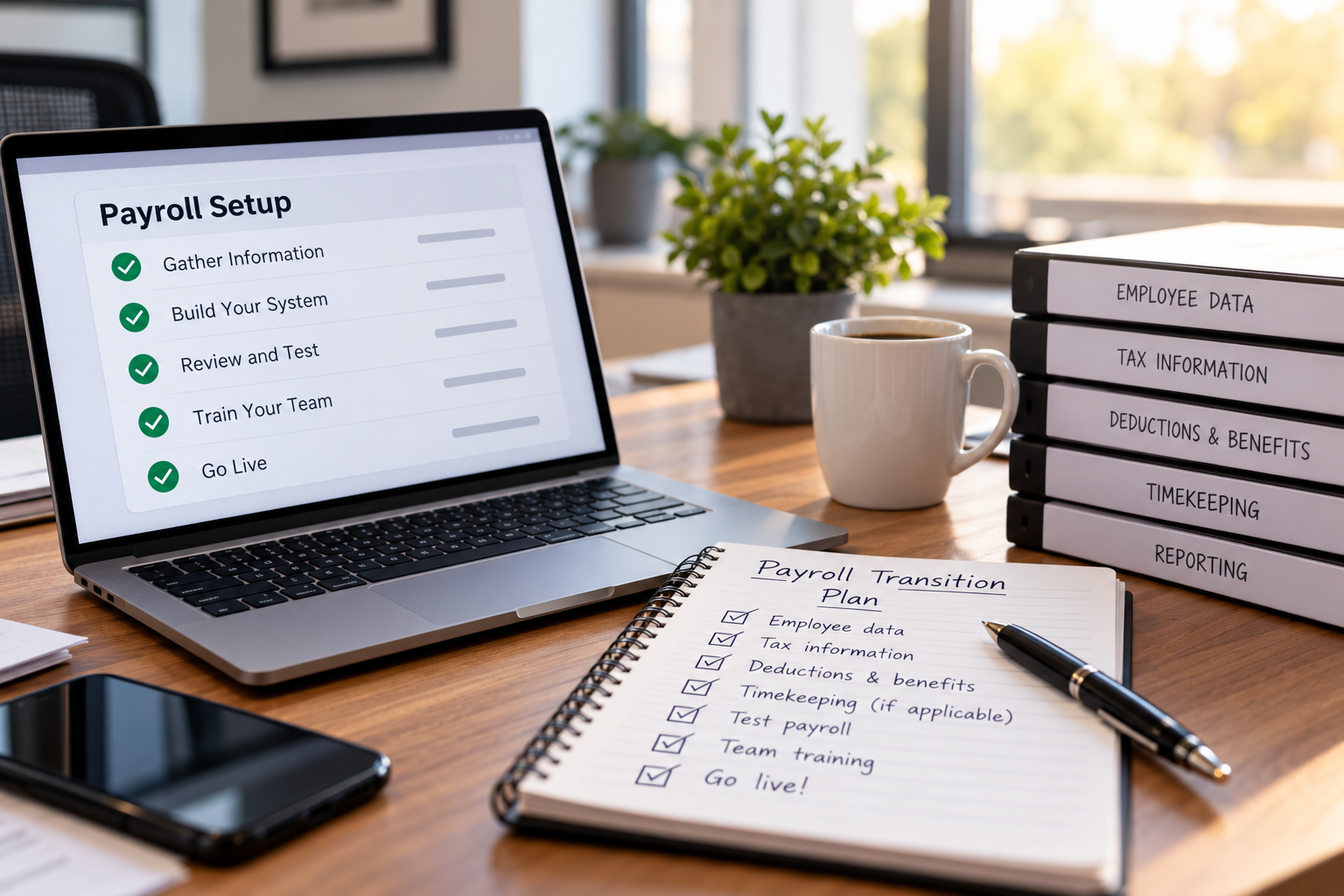
While every provider handles implementation a little differently, here’s generally what you can expect.
1. Talk Through Your Current Setup
Before anything gets built, your new provider needs to understand how you operate today.
How often do you pay employees? Do you have hourly and salaried employees? Multiple locations? Different pay policies? Timekeeping? Benefits? 401(k)?
This is also the time to talk about what’s frustrating you with your current setup.
After all, there’s no point in changing providers just to recreate the same problems.
2. Gather Your Payroll Information
Next comes getting the information needed to build your account.
That can include employee information, tax IDs, direct deposit information, deductions, PTO balances, payroll schedules, year-to-date payroll information, and other company details.
Your new provider should help you understand exactly what’s needed and where to find it.
3. Build Your New System
Once the information is collected, your new payroll system can be configured.
This is where payroll schedules, earnings, deductions, taxes, departments, reporting, general ledger information, and other settings are built.
If you’re adding timekeeping, onboarding, benefits, or other HR tools, those may be configured during this stage as well.
4. Review and Test Everything
This is an important step.
Before your first live payroll, you want to make sure employees, pay rates, deductions, taxes, direct deposits, and other information are correct.
Finding an issue during testing is much easier than finding it after employees have been paid.
5. Train Your Team
A new system doesn’t help much if nobody knows how to use it.
Your payroll and HR team should know how to process payroll, run reports, approve time, add employees, and handle the tasks they’ll use regularly.
Employees may also need information about accessing their new employee self-service account.
6. Process Your First Payroll
Then it’s time to go live.
Your first payroll with a new provider is an important one, so there should be someone available to help answer questions and make sure everything goes as planned.
And the support shouldn’t disappear after that first payroll.
What Can Slow Down a Payroll Switch?
Usually, it’s not the payroll system itself that causes delays.
It’s getting all the pieces together.
Missing employee information, complicated pay policies, multiple locations, timekeeping rules, benefits, 401(k) connections, or other integrations can add time to the process.
Another big one?
Waiting too long to get started.
If you know you want to make a change by a certain date, starting the conversation early gives you more breathing room.
Do You Have to Wait Until January?
No.
January 1 can be a convenient time to change payroll companies because you’re starting a new calendar year, but businesses switch payroll providers throughout the year.
If your current situation isn’t working, you don’t necessarily have to live with it for another six months just because it’s not January.
A good payroll provider can walk you through what a mid-year transition would involve and help determine the best timing for your business.
What Does Switching to ASAP Look Like?
At ASAP Payroll, we don’t expect you to figure out the transition on your own.
Our team works with you to gather your information, build your account, review the setup, and prepare for your first payroll.
If you’re also moving timekeeping, onboarding, HR, benefits, or other tools, we’ll talk through those pieces as part of the process.
The goal isn’t just to get you live.
It’s to get you live correctly and make sure you’re comfortable with the system you’re going to be using.
And once implementation is finished, you still have a local team you can reach when you need help.
Thinking About Making a Payroll Change?
You don’t need to have everything figured out before talking to a new payroll provider.
In fact, that’s part of the conversation.
If you’re considering a change, start by talking through your current setup, what’s not working, and when you’d ideally like to make the move.
From there, you can get a much better idea of what the transition would actually look like for your business.