
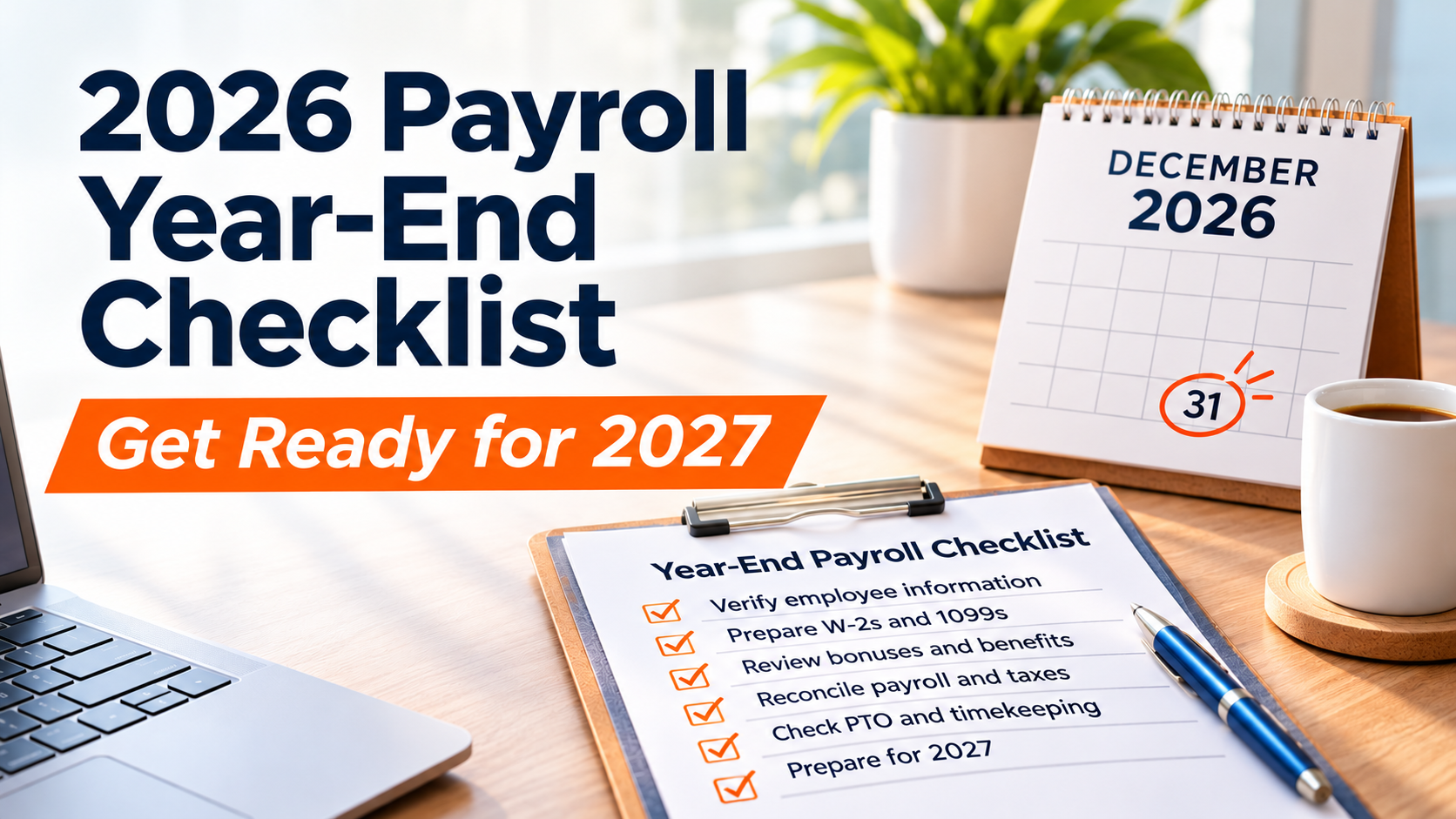
As 2026 comes to a close, business owners and HR professionals have a lot on their plates. Between holiday schedules, employee requests, and preparing for the new year, payroll can quickly become another source of stress.
And when it comes to payroll, even a small mistake can create bigger problems.
Incorrect W-2s, missing employee information, or overlooked tax deadlines can lead to frustrated employees, additional work, and possible penalties.
The good news? A little preparation now can make year-end payroll much easier.
Whether you have 10 employees or 100, this checklist will help you close out 2026 and start 2027 with confidence.
1. Verify Employee Information
One of the easiest ways to prevent year-end payroll problems is to make sure your employee records are accurate.
Before December 31, review the following information:
- Employee names and Social Security numbers
- Current mailing addresses
- Federal and state tax withholding information
- Employee status and termination dates
- Direct deposit information
Even something as simple as an incorrect address can cause problems when employees need their tax forms.
Quick Tip: Ask employees to review their personal information through your payroll system’s employee self-service portal before year-end.
2. Prepare for W-2 and 1099 Reporting
January will be here before you know it, and that means tax reporting season is right around the corner.
Employers need to make sure wages, taxes, and other compensation are reported correctly.
For the 2026 tax year, employers generally must provide W-2 forms to employees and file them with the Social Security Administration by February 1, 2027.
Businesses that work with independent contractors should also review their 1099 reporting responsibilities.
For payments made in 2026, the general Form 1099-NEC reporting threshold increased to $2,000 for qualifying nonemployee compensation. Exceptions and special reporting rules may apply.
Quick Tip: Don’t wait until January to start reviewing payroll records. Catching errors in November or December can save time when tax forms are prepared.
3. Review Bonuses and Taxable Benefits
Did your company provide year-end bonuses, gift cards, company vehicles, or other employee benefits during 2026?
Some of these items may need to be included in an employee’s taxable wages.
Common examples include:
- Cash bonuses and commissions
- Certain employee gift cards
- Personal use of company vehicles
- Certain employer-paid benefits
- Other taxable fringe benefits
If these items aren’t reported correctly, employees may receive inaccurate W-2 forms.
Quick Tip: Work with your payroll provider and accountant to identify taxable benefits before processing your final payroll of the year.
4. Reconcile Payroll and Tax Records
Before closing out 2026, make sure your payroll records match your tax reporting information.
Review total wages paid, taxes withheld, employer tax contributions, and any adjustments made throughout the year.
Pay special attention to manual checks, voided checks, off-cycle payrolls, and payroll corrections.
You should also confirm that your payroll totals reconcile with your quarterly tax filings.
This is especially important for employers operating in multiple states.
Quick Tip: Run a year-to-date payroll summary and review any unusual amounts before your final payroll.
5. Review Benefits and Retirement Contributions
Year-end is also a good time to review employee benefits and retirement deductions.
Make sure health insurance deductions, retirement contributions, and other benefit elections are accurate.
If your company offers a 401(k), confirm that employee contributions have been recorded correctly and review any applicable annual limits.
You should also prepare for changes that may take effect in January 2027, including updated employee benefit elections.
Quick Tip: Coordinate with your benefits broker, retirement plan provider, and payroll team before the first payroll of the new year.
6. Check PTO, Overtime, and Timekeeping Records
Accurate timekeeping plays an important role in year-end payroll.
Review outstanding timesheets, overtime, paid time off, and any employee scheduling adjustments.
If your company allows unused PTO to carry over into the next year, make sure the correct balances are reflected in your system.
Keep in mind that PTO payout and carryover requirements vary by state and company policy.
Quick Tip: Review your PTO policies now so employees and managers know what to expect before December 31.
7. Plan Around Holiday Payroll Deadlines
The holiday season can create challenges for payroll processing.
Christmas Day and New Year’s Day are federal banking holidays, which can affect direct deposit processing.
If your normal payroll schedule falls near a banking holiday, you may need to submit payroll earlier than usual.
Planning ahead helps ensure employees receive their paychecks on time.
Quick Tip: Review your payroll provider’s holiday processing schedule and communicate any changes to employees.
8. Prepare Your Payroll for 2027
Year-end preparation isn’t just about closing out the current year. It’s also about making sure your first payroll of 2027 goes smoothly.
Before January, review:
- Federal, state, and local payroll tax changes
- Applicable minimum wage changes
- Employee salary and hourly rate adjustments
- Updated benefit deductions
- Retirement contribution limits
- New employee withholding elections
- Changes to your payroll processing schedule
Employers with employees in multiple states should pay particular attention to different state and local requirements.
Quick Tip: Review your first payroll of January carefully. Catching an error early is much easier than correcting several payrolls later.
9. Important Year-End Payroll Updates for Indiana Employers
If your business operates in Indiana, there is an additional reporting change to be aware of as you prepare for 2027.
Indiana Enhanced Wage Reporting
Beginning with the fourth quarter of 2026, Indiana is implementing Enhanced Wage Reporting requirements.
The changes require additional employee information as part of quarterly unemployment wage reporting, including:
- Job title
- Hours paid
- Reporting unit number
- Apprenticeship or internship status
Indiana is also updating its requirements for Standard Occupational Classification (SOC) codes.
The first enhanced wage report covers wages paid from October through December 2026 and is due January 31, 2027.
Employers should coordinate with their payroll provider to understand how these changes affect their reporting process and whether any additional employee information is needed.
Indiana employers should also review state and county income tax withholding requirements and confirm their unemployment reporting information is accurate.
Quick Tip: Don’t assume your payroll reporting requirements will stay the same from year to year. Review new state requirements before filing deadlines arrive.
Your 2026 Year-End Payroll Checklist
Before you close out the year, make sure you’ve completed these important steps:
-
Verify employee names, addresses, and Social Security numbers.
-
Review W-2 and 1099 reporting requirements.
-
Report taxable bonuses and fringe benefits.
-
Reconcile payroll totals and tax records.
-
Confirm benefit and retirement deductions.
-
Review PTO balances and timekeeping records.
-
Check holiday payroll processing deadlines.
-
Prepare payroll settings for 2027.
-
Review applicable state reporting changes.
Taking care of these items now can help you avoid unnecessary headaches in January.
Frequently Asked Questions About Year-End Payroll
When are 2026 W-2 forms due?
Employers generally must provide employees with their 2026 W-2 forms and file them with the Social Security Administration by February 1, 2027.
What should employers review before their final payroll of 2026?
Employers should verify employee information, review bonuses and taxable benefits, reconcile payroll records, and confirm that all wages and deductions are accurate.
Can payroll mistakes be corrected after year-end?
Yes. Payroll errors can often be corrected after year-end, but the process may require amended payroll tax returns or corrected W-2 forms. Identifying mistakes before December 31 can make corrections easier.
How do banking holidays affect payroll?
Federal banking holidays can delay ACH processing. Employers may need to submit payroll earlier to ensure employees receive their pay on time.
What payroll changes should employers prepare for in 2027?
Employers should review changes to payroll taxes, minimum wages, benefit deductions, retirement contribution limits, and state reporting requirements before processing their first payroll of 2027.
Make Year-End Payroll Easier With ASAP Payroll
Year-end payroll doesn’t have to be complicated.
With the right technology and a dedicated payroll representative, you can spend less time worrying about payroll and more time running your business.
At ASAP Payroll, we combine powerful payroll and HR technology with personal service. You’ll have a dedicated Customer Service Representative who knows your business and is there when you need help.
Whether you’re preparing for year-end or considering a new payroll provider for 2027, we’re here to help.
Powerful Technology. Real People. Better Payroll.